
The defining question in biotechnology is shifting from discovery for its own sake to disciplined execution at scale. The center of gravity is moving from isolated breakthroughs to integrated systems where design, data, and production are inseparable.
It’s no longer Can we build it?—it’s How fast can we validate, scale, and supply it?
The advantage now accrues to organizations that treat biotech manufacturability as a first-principles constraint, not a downstream task.
Across the industry, biology is moving from discovery to design, and from experiment to execution. The frontier is velocity—the speed and precision with which ideas are translated into manufacturable systems, repeatable platforms, and investable, de-risked programs. This is where the next wave of biopharma value will be created: tighter cycle times, cleaner COGS curves, and quality systems that scale without drama. In this model, biotech manufacturability becomes the operating doctrine that aligns R&D, CMC, quality, and finance around the same goal: predictable output and durable margins.
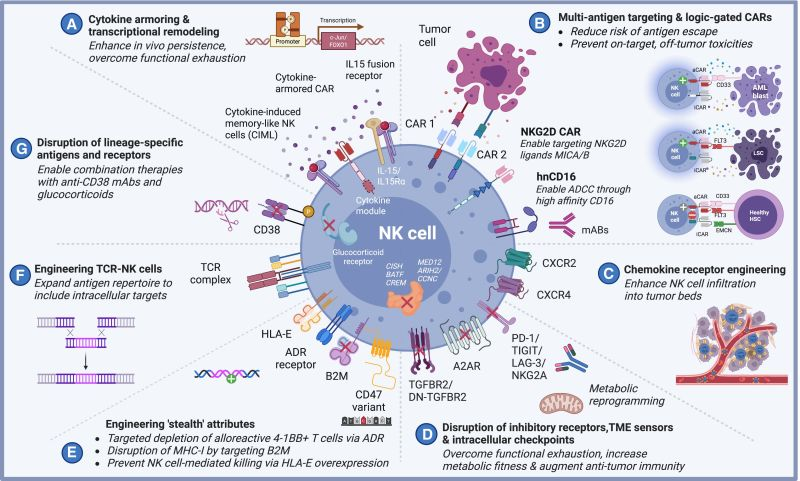
This shift isn’t about hype; it’s about convergence. Engineered NK cells are becoming platformable rather than bespoke. Circular RNAs are collapsing targeting, delivery, and expression into a single codebase. AI-assisted phage matching compresses AMR timelines from months to days. Cell-cultured cocoa butter stabilizes commodity supply chains. And Big Pharma is reallocating capital from artisanal modalities toward scalable conjugates, automation, and data-driven manufacturing. The signal is clear: design for scale from day one or get left behind.
What unites these signals is a simple equation:
Targeting × Throughput × Unit Economics.
When those three variables align, biology becomes not only programmable — it becomes predictable.
The Shift from Breakthroughs to Systems
The old model of biotech celebrated breakthroughs — one molecule, one assay, one leap. The new model rewards systems.
Programmable biology, industrial-grade AI, and advanced manufacturing are no longer separate fields; they are components of a single ecosystem that learns in real time. The goal is not to prove that biology works — that’s settled. The goal is to make it repeatable, measurable, and priceable.
Companies are learning to build once and deploy infinitely. The most valuable assets in biotech today are not patents or pipelines — they are platforms that compound learning.
The Manufacturability Mandate
Manufacturability has become the hidden engine of innovation.
Every modality now lives or dies by how easily it scales.
Allogeneic NK cells are the prototype: safe, modular, and automatable.
Circular RNAs demonstrate how biological design collapses delivery, targeting, and expression into a single codebase.
AI factories — like the NVIDIA-Eli Lilly partnership — are turning GPUs into the next generation of bioreactors.
The lesson is universal: the companies that treat manufacturing as a strategic design constraint, not a downstream task, will define the next decade of biotech.
At Berube BioVentures, we call this “manufacturability by default.”
It means designing processes that scale from day one — digitally modeled, data-anchored, and economically sound.
Time as the Ultimate Cost Center
In biotech, cost of goods matters — but cost of time matters more.
A 12-week analytical cycle is no longer acceptable when a $50, three-day RNA-seq can deliver actionable insight before your next team meeting.
Data latency has become a manufacturing defect.
The smartest organizations now operate on qPCR cadence — continuously validating, learning, and adapting. The result isn’t just faster science; it’s a new operating rhythm for the industry, where every experiment compounds into institutional intelligence.
Velocity is not chaos. It’s discipline accelerated.
Convergence in Action
Look closely, and the pattern is everywhere.
- Immunotherapy: CAR-NKs are evolving into programmable immune platforms — modular, safe, and capable of industrial throughput.
- RNA therapeutics: Aptamer-embedded circular RNAs unify targeting, translation, and durability in a single construct — an elegant solution to a decade-long delivery problem.
- Anti-infectives: AI-assisted phage matching makes adaptive therapy clinically viable, closing the loop between pathogen sequencing and patient care.
- Alternative proteins: Microalgae and cell-cultured lipids are transforming from novelty to necessity, solving supply chain fragility while meeting ESG mandates.
- Manufacturing science: Chromatography-free capture, site-specific conjugation, and closed-system automation are rewriting the economics of GMP production.
Each signal points to the same truth: biology is becoming an engineered discipline.
The winners won’t just innovate — they will orchestrate.
A New Era of Industrial Design
The next phase of biotech will be defined not by isolated discoveries, but by the precision of the operating systems behind them.
Industrial design now extends to bioprocessing: closed, modular, data-rich, and autonomous. The “factory” of the future will not be built around steel and solvent but around information flow — experiments planned by AI, executed by robotics, and validated in silico before a pipette ever moves.
This is the inflection point. Biotech is no longer just science. It’s infrastructure.
And infrastructure, once established, compounds indefinitely.
What Velocity Demands
Velocity requires more than capital — it requires clarity.
Clarity in how we define success.
Clarity in how we align science with commercial reality.
Clarity in how we design systems that scale faster than markets shift.
At Berube BioVentures, we believe clarity is not a luxury — it’s a force multiplier. Our work sits at the intersection of innovation and execution, ensuring that brilliant ideas don’t die in translation between R&D and GMP.
Every contract, every partnership, every line of code we help shape serves a single purpose: to move science forward with speed, precision, and permanence.
The Future Belongs to the Builders
The companies that lead the next decade will prioritize systems over one-off assets. They will build operating systems for biology anchored in biotech manufacturability, not demos.
- Experiments: automated, reproducible, and version-controlled.
- Analytics: continuous, at-line, and decision-ready.
- Economics: modeled from day one with clear COGS and cycle-time targets.
- Teams: cross-functional operators fluent in science, data, and process engineering.
The question has shifted from can we build it to how fast can we scale it. The industry is moving from invention to execution, from isolated functions to integrated pipelines, from ad hoc heroics to standard work.

This is not speed for its own sake. It is disciplined acceleration: shorter development cycles, higher batch success, and measurable reductions in cost and risk. Biotech manufacturability becomes the organizing principle that aligns R&D, CMC, quality, and finance around the same outcomes: reliable supply, predictable margins, and clinical impact.
The mandate is clear—design for scale, verify with data, and operate with precision. That is how durable leaders are built.
Berube BioVentures
We bring clarity to the vision within your company.
Strategic partnerships. Scalable systems. Intelligent growth.
To collaborate or learn more 📧 jay@berubebioventures.com
Contact us today at link here–> /contact-us